
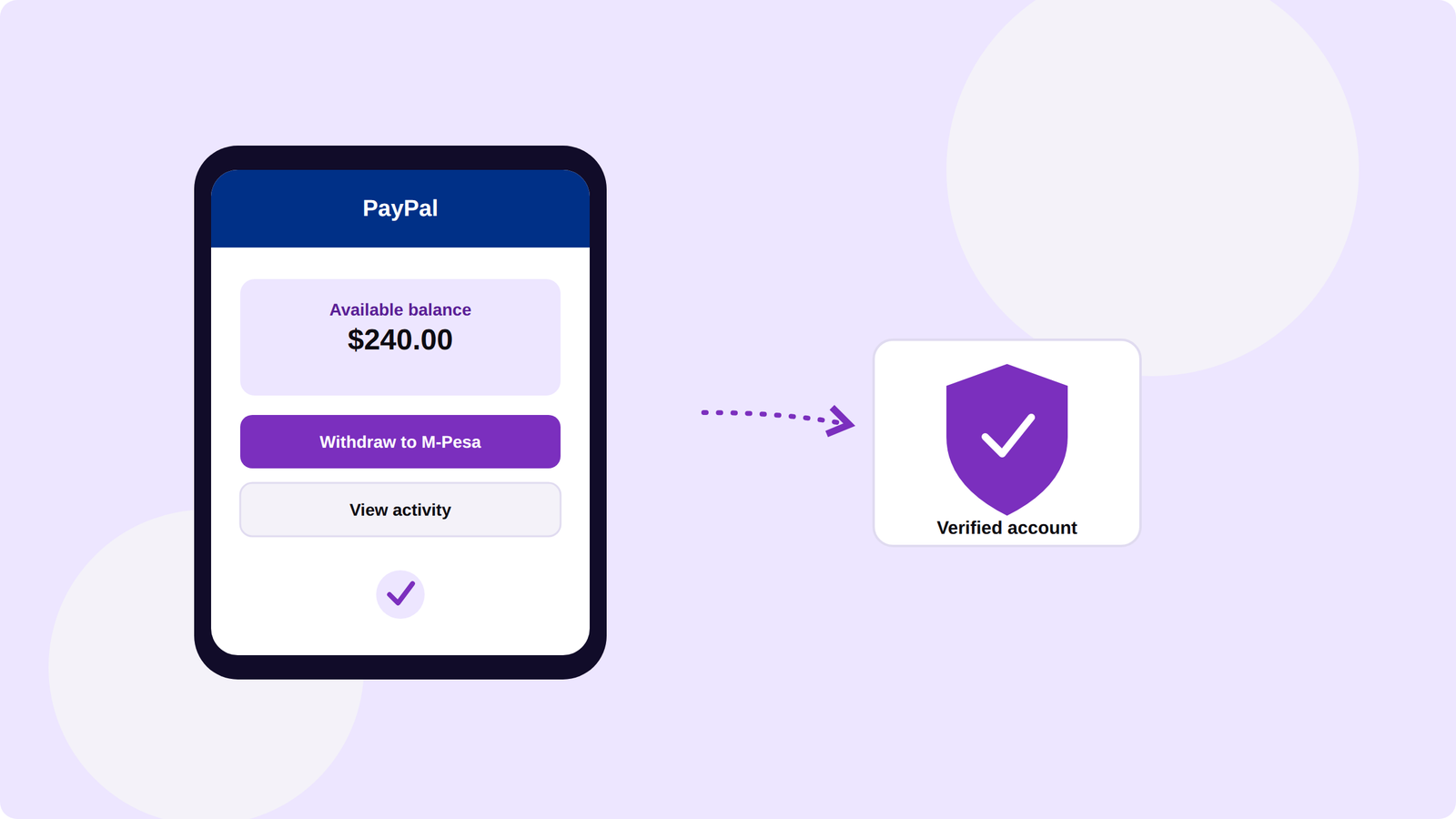
If you’ve been paid through PayPal in Kenya recently, you may already know something has changed. Since June 2026, PayPal has been freezing and restricting Kenyan accounts as part of a tighter anti-money-laundering crackdown — and freelancers, online sellers, and remote workers are the ones caught in the middle. This guide covers what’s actually happening with PayPal Kenya right now, how to keep your account in good standing, and how to receive and withdraw money safely if you depend on it for income.
The short version
- PayPal has been freezing Kenyan accounts since June 2026 over anti-money-laundering compliance tied to Kenya’s FATF grey-list status.
- Keep your name, address, and phone number accurate on PayPal, and link a real Kenyan bank or card — mismatches are the most common trigger.
- Avoid sudden spikes in payment volume on a quiet account, and keep contracts or invoices for every payment you receive.
- Withdraw to M-Pesa through the M-Pesa Super App’s Global Payments tab — the old web portal was discontinued in 2025.
- Never buy a “verified” PayPal account from a third party — it violates PayPal’s terms and is one of the surest ways to lose your funds.
Why PayPal Kenya Accounts Are Being Frozen in 2026
Kenya has been on the Financial Action Task Force’s grey list since February 2024, which flags it for increased monitoring around money laundering and terrorism financing. International payment companies respond to that designation by tightening verification on accounts tied to the country — and PayPal has done exactly that. Since early June 2026, Kenyan users have reported accounts being restricted or permanently limited after PayPal requested proof of identity, a physical address, and documentation explaining the source of incoming funds.
If you’re affected right now: accounts that don’t provide the requested documentation can be blocked from sending or withdrawing for at least 180 days, and may be permanently deactivated after six months — with the balance not returned automatically.
The hardest requirement for most Kenyans is proof of a formal physical address, since Kenya’s addressing system relies on landmarks rather than structured streets. A recent utility bill (electricity, water, or internet) in your name is the closest substitute PayPal currently accepts.
This isn’t unique to PayPal Kenya users specifically — the company has applied similar scrutiny in other African markets under global watch for money laundering. But the practical effect is the same either way: a PayPal online shop or freelance income stream that worked smoothly a year ago can now stall without warning.
How to Keep Your PayPal Kenya Account in Good Standing
Match your details exactly
Your legal name, address, and phone number on PayPal should match your ID and your linked bank or M-Pesa exactly — mismatches are one of the most common freeze triggers.
Document every payment
Save the contract, invoice, or message thread behind every payment you receive. If PayPal asks for proof later, having this ready can be the difference between a quick review and a frozen account.
Avoid sudden spikes
A burst of activity on a previously quiet account is treated as a fraud signal. If you expect a much larger payment than usual, it can help to let your client know in advance and keep paperwork ready.
Setting Up PayPal to Receive Payments in Kenya
Create your account at paypal.com/ke using your real legal name exactly as it appears on your national ID, since this is what gets checked during verification.
Link a Kenyan bank account or card. Equity Bank, KCB, Co-op Bank, NCBA, and Absa all support PayPal linkage, and a verified card or bank significantly increases the amount you can send and receive.
Confirm your email and phone number, and add your physical address using the most formal description available — include estate name, building, and the nearest official landmark.
Share your PayPal.me link or registered email with clients so they can pay you directly, or add PayPal as a payout method on platforms like Upwork or Fiverr under billing settings.
When a payment lands, leave it in your PayPal balance briefly rather than withdrawing instantly every time — an account that holds and uses funds normally builds a more stable transaction history.
Withdrawing PayPal to M-Pesa
The standalone PayPal–M-Pesa web portal was discontinued in August 2025. Withdrawals now happen directly inside the M-Pesa Super App, through Safaricom’s official M-Pesa PayPal service.
Open the M-Pesa Super App and log in with your PIN or biometrics.
Go to the Services tab, then Global Payments, and select the PayPal mini app.
The first time, tap Link Account and log in to PayPal to connect the two accounts — this only needs to happen once.
Tap Withdraw from PayPal, enter the USD amount, and review the exchange rate shown before confirming.
M-Pesa app → Services → Global Payments → PayPal
Confirm with your M-Pesa PIN. Funds typically arrive within minutes, subject to standard M-Pesa transaction limits.
| Cost layer | Approximate rate | Where it applies |
|---|---|---|
| PayPal receiving fee | ~4.4% + fixed fee | Commercial payments only |
| USD→KES conversion margin | ~3–4% below mid-market | Inside PayPal, on conversion |
| M-Pesa withdrawal margin | ~3% | On the PayPal→M-Pesa transfer |
| Per-transaction limit | Standard M-Pesa cap applies | On the withdrawal step |
Combined, receiving and cashing out a PayPal payment in Kenya can cost upwards of 8–10% once every layer is counted.
For frequent international payments, Wise or Payoneer often cost less than PayPal once the conversion margin and withdrawal fee are combined.
Want help setting up a payment system that won’t leave your income stuck mid-transfer?
Chat with WebElders on WhatsAppWhat to Do If Your PayPal Account Is Already Frozen
Start in PayPal’s own Resolution Center, which lists exactly what’s been requested and tracks the status of your case.
- Submit everything requested in one go. Government ID, proof of address, and contracts or invoices for the flagged payment — incomplete submissions are the most common reason reviews drag on.
- Keep copies of what you send. If you need to escalate or appeal, having your own record of exactly what was submitted and when matters.
- Know the timelines. A restricted account that completes verification can be restored relatively quickly. A permanently limited account still holds remaining funds for up to 180 days before they can be withdrawn.
- Don’t panic-close the account. Closing or abandoning a restricted account before resolving it can complicate recovering any balance still inside.
Avoid “verified PayPal account” sellers. Some sites and Telegram channels offer pre-verified PayPal accounts for sale to Kenyans. Using one means operating under someone else’s verified identity, which violates PayPal’s terms outright. These accounts get frozen the moment PayPal’s systems detect the mismatch, and any money inside can be held indefinitely with no real path to recovery.
Frequently Asked Questions
Why is PayPal freezing Kenyan accounts in 2026?
PayPal has tightened verification on Kenyan accounts as part of anti-money-laundering compliance, partly because Kenya remains on the FATF grey list for increased monitoring. Accounts receiving money from abroad may be asked for proof of identity, a physical address, and documentation explaining the source of funds.
How do I avoid getting my PayPal account frozen in Kenya?
Keep your PayPal profile fully updated with your real legal name, address, and phone number, verify with a linked Kenyan bank or card, and avoid sudden spikes in transaction volume on a previously quiet account, since that pattern is treated as a fraud signal. Keep contracts, invoices, and message records for any payment you receive.
Can a Kenyan PayPal account receive payments from international clients?
Yes, personal PayPal accounts registered in Kenya can receive USD and other currencies from clients abroad. The balance can be held for up to 30 days and withdrawn via the M-Pesa Super App or a linked Kenyan bank account, though business-grade features like invoicing at scale are not available on Kenyan accounts.
How do I withdraw money from PayPal to M-Pesa?
Open the M-Pesa Super App, go to Services, then Global Payments, and select PayPal. Link your accounts the first time, then choose Withdraw, enter the USD amount, and confirm with your M-Pesa PIN. Funds typically arrive within minutes for amounts under standard M-Pesa transaction limits.
Is it safe to buy a verified PayPal account?
No. Buying a pre-verified PayPal account registered under someone else’s identity violates PayPal’s terms of service. Accounts set up this way are routinely frozen once PayPal’s verification systems detect a mismatch, and any funds inside can be held or forfeited with no guarantee of recovery.
What do I do if PayPal has already frozen my account?
Submit exactly the documents PayPal requests, such as a government ID, proof of address, and contracts or invoices for the payments in question, as completely as possible on the first attempt. Keep copies of everything you submit. If the account is restricted rather than permanently limited, providing complete documentation is usually what restores access; if it’s permanently limited, recovering any remaining balance can still take up to 180 days.
What are the fees for PayPal in Kenya?
Receiving a commercial payment carries PayPal’s standard fee of around 4.4% plus a fixed charge, and the USD-to-KES conversion includes an exchange margin of roughly 3 to 4% below the mid-market rate. Withdrawing to M-Pesa adds a further percentage on top, so the total cost of getting paid and cashing out can run well above 5% combined.
Ready to Get Paid Without the Guesswork
PayPal in Kenya still works for receiving freelance income and online payments in 2026 — it just requires more care than it used to. Keep your details accurate, document your income, and use the M-Pesa Super App for withdrawals, and most of the friction described above is avoidable.
Need a payment setup that doesn’t depend on a single account staying unfrozen?
Get it set up on WhatsAppNeed your online shop sorted?
We build, fix and manage online shops — same-day response. Message us on WhatsApp and tell us what you need.
Message us on WhatsApp